A City Conceived, Not Accidental
In an Indian context where most historic cities evolved organically, Jaipur stands apart as a rare example of a city that was consciously designed before it was inhabited. Established in 1727 by Maharaja Sawai Jai Singh II, Jaipur represents an early and remarkably sophisticated experiment in urban planning—one that continues to influence architectural discourse centuries later.
Designed by Vidyadhar Bhattacharya, the city was structured around a rational grid, symbolic cosmology, and climatic wisdom. Today, as Jaipur expands rapidly into a contemporary metropolis, its architectural journey offers valuable insights into how intentional design can sustain identity—even as the city confronts modern pressures.
Urban Order as Architectural Philosophy
The walled city of Jaipur was divided into nine sectors, a conceptual framework derived from Vedic planning principles. However, what distinguishes Jaipur is not merely its adherence to traditional texts, but the pragmatic intelligence with which these ideas were applied.
Broad, axial streets enabled movement, trade, and processions, while secondary lanes supported residential life. This hierarchy of streets was not only functional but climatic—allowing wind movement and reducing heat accumulation in a desert environment. The consistency of façade treatment, scale, and material palette established a cohesive urban character rarely seen in Indian cities of that era.
From a contemporary architectural lens, Jaipur’s planning reflects an early understanding of urban legibility, human scale, and environmental responsiveness—principles that remain central to modern urban design.
Architecture Rooted in Climate and Culture
Jaipur’s architectural language is defined by its seamless integration of form, climate, and social structure. Buildings were inward-looking, organized around courtyards that moderated temperature and provided privacy. Elements such as jharokhas, chajjas, and perforated screens were not ornamental excesses but tools of environmental control.
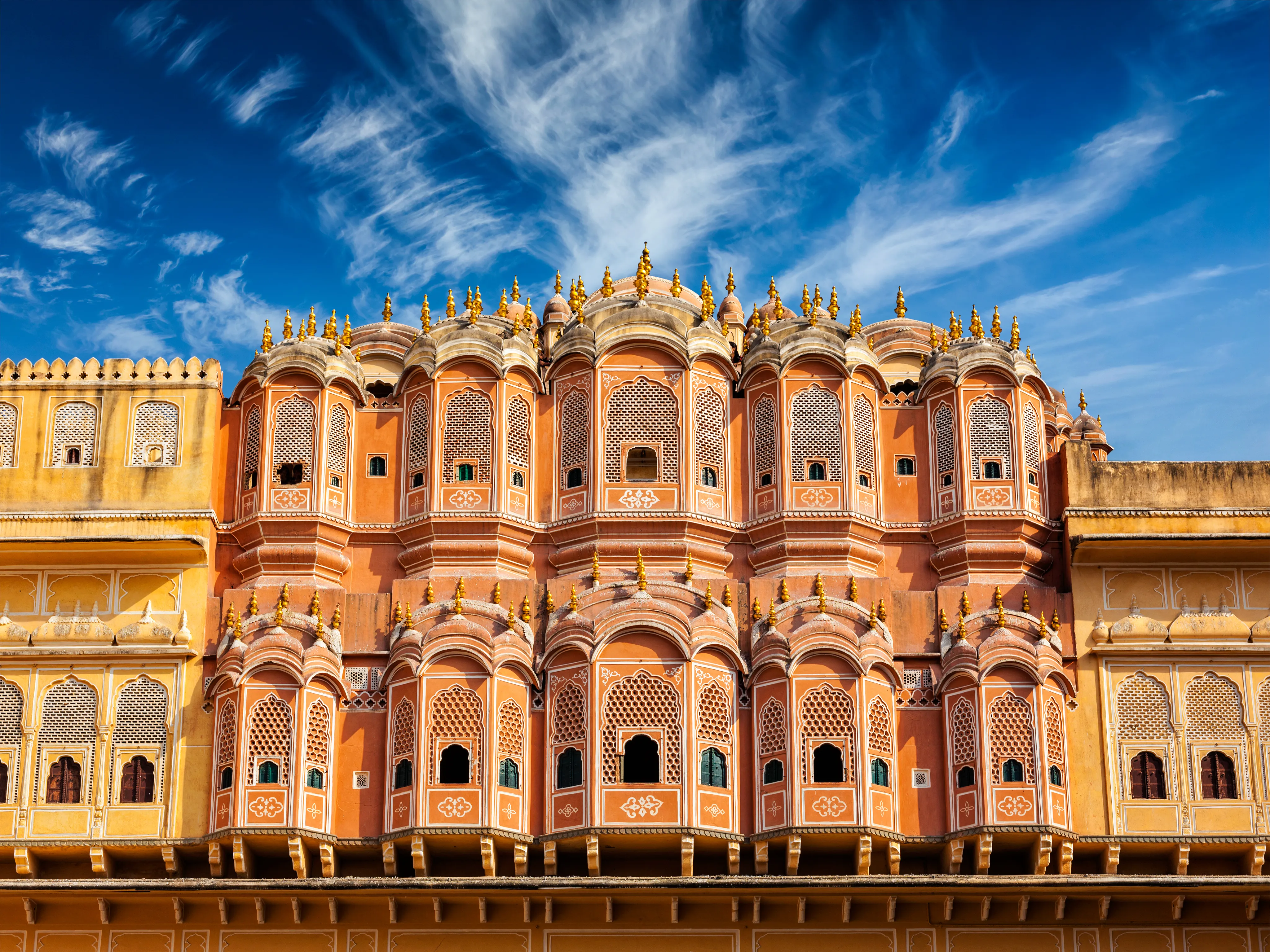
Landmark structures like the City Palace and Hawa Mahal exemplify this intelligence. Hawa Mahal’s iconic façade, often reduced to a visual symbol, is in fact a sophisticated climatic device—its latticework enabling ventilation while filtering light and heat.
This synthesis of Rajput and Mughal influences resulted in an architectural vocabulary that was both regal and restrained, expressive yet deeply functional.
The Colonial Interlude: A Controlled Transition
Unlike many Indian cities that were dramatically reshaped during colonial rule, Jaipur experienced a more measured transformation. British interventions introduced new building typologies—railway infrastructure, civic institutions, and educational buildings—often employing Indo-Saracenic expressions that respected local architectural sensibilities.
Urban growth during this period extended cautiously beyond the walled city, marking the beginning of Jaipur’s spatial expansion. While these areas lacked the symbolic rigor of the original plan, they maintained moderate scale and material continuity.
Architecturally, this phase can be seen as a dialogue rather than a disruption, allowing Jaipur’s core identity to remain largely intact.
Post-Independence Growth and the Question of Identity
The decades following independence brought rapid urbanization, population influx, and economic diversification. Jaipur expanded horizontally and vertically, with new residential layouts, commercial districts, and hospitality developments reshaping its periphery.
However, this growth also exposed critical challenges:
The dilution of architectural coherence
Incongruous high-rise developments
Visual and structural pressure on the historic core
Commercialization of heritage precincts
Yet, these challenges also sparked renewed conversations around conservation. Adaptive reuse of havelis, façade control regulations, and heritage-led tourism initiatives have attempted to reconcile growth with preservation—culminating in Jaipur’s designation as a UNESCO World Heritage City in 2019.
Jaipur Today: Reinterpreting Tradition
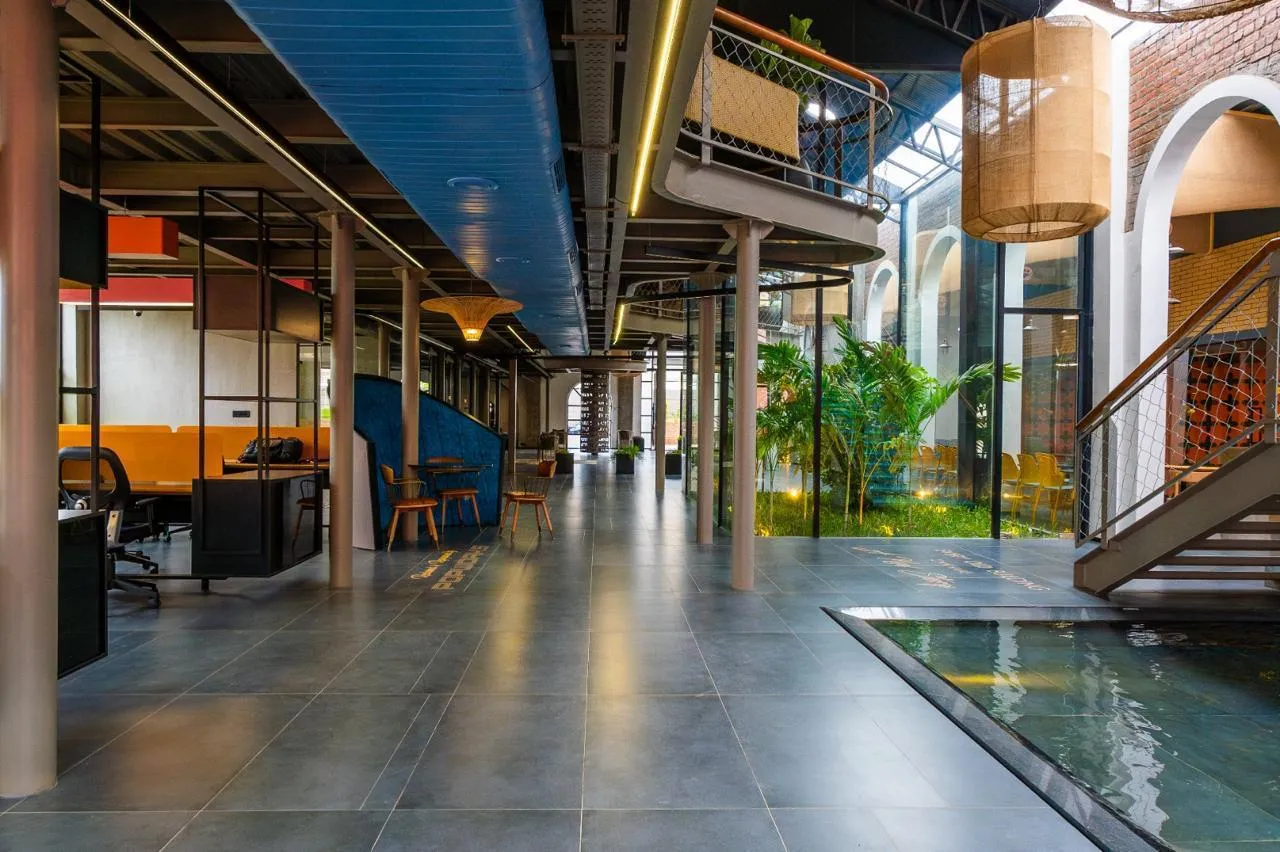
Contemporary Jaipur is witnessing a gradual shift toward context-sensitive design. A new generation of architects is revisiting traditional planning principles—not as stylistic nostalgia, but as frameworks for sustainability and livability.
Passive cooling strategies, courtyard typologies, use of local materials, and craft integration are increasingly finding relevance in modern projects. The challenge lies not in replicating historic forms, but in translating their underlying intelligence into contemporary expression.
Conclusion: Lessons from a Designed City
Jaipur remains one of India’s most compelling architectural case studies—a city that began with clarity of vision and continues to test the resilience of that vision against time and transformation.
For architects and urban designers today, Jaipur offers a critical reminder: cities thrive when architecture is guided by context, climate, and culture rather than trend alone. Its evolution underscores the importance of intentional urbanism—where design is not merely about buildings, but about shaping enduring urban identities.
As Indian cities grapple with rapid growth, Jaipur’s architectural legacy serves not as a relic of the past, but as a blueprint for a more thoughtful future.