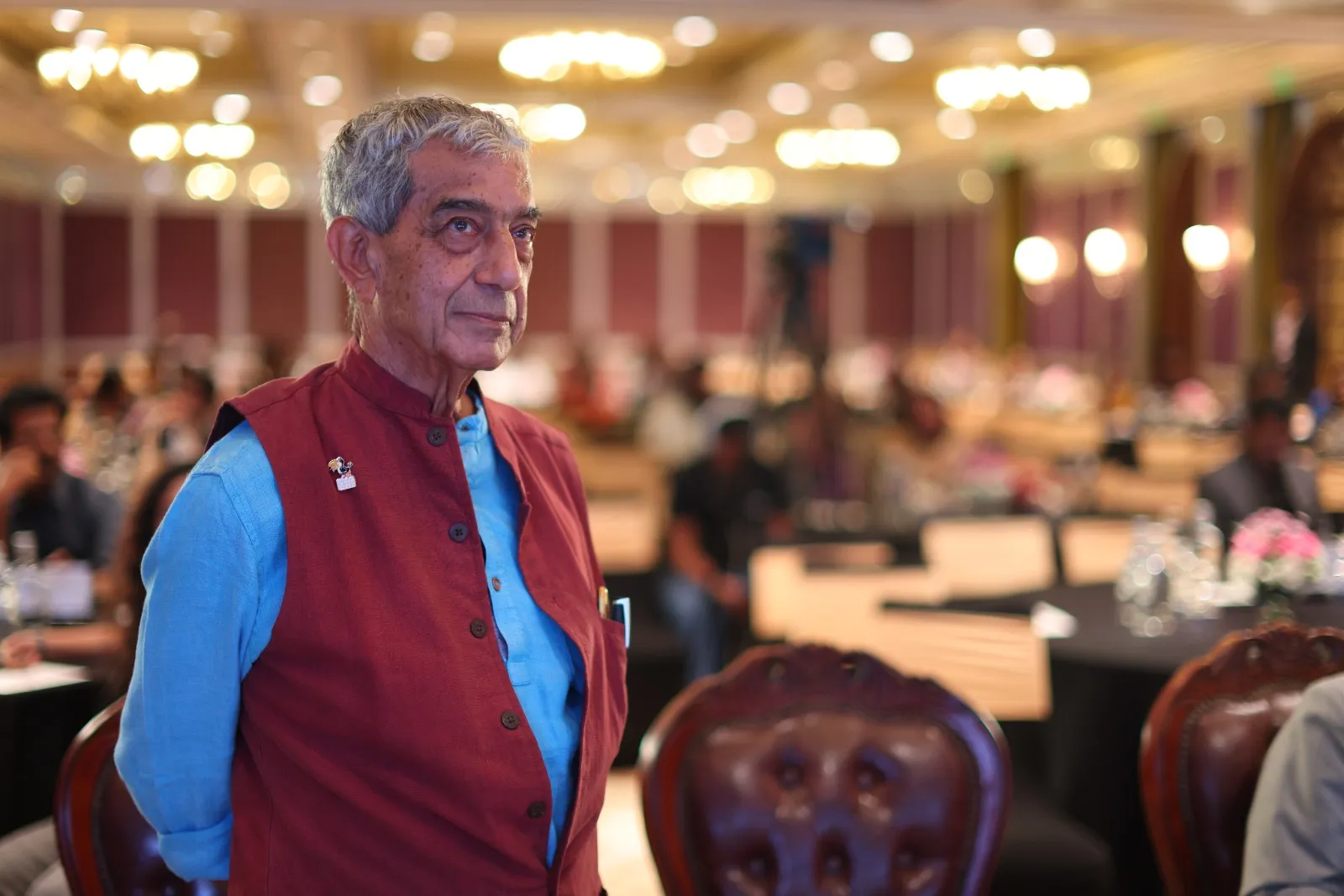
Ar. Krishnarao Jaisim, widely known as Jaisim, occupies a distinctive place in the landscape of Indian architecture. With a career spanning more than five decades, his work represents a rare combination of intellectual independence, environmental sensitivity, and experiential depth. In a profession often shaped by stylistic movements and visual branding, Jaisim’s architecture has remained consistently personal—guided less by trends and more by conviction.
https://youtube.com/shorts/2UDBkRMvIRA?feature=share
Born in 1944, Jaisim grew up in an environment where architecture was already part of familial memory; his grandfather served as the chief architect to the Maharaja of Mysore. Yet his path into architecture was driven not by inheritance but by curiosity. Educated at the Madras School of Architecture, he graduated in 1966 at a time when Indian architecture was negotiating its post-independence identity. Early exposure to modernist thinking, combined with a strong interest in mechanics and systems, shaped his understanding of buildings as living, responsive entities rather than static objects.
After gaining initial professional experience with LM Chitale & Son, Jaisim founded his own practice, Jaisim–Fountainhead, in 1970. The name itself reflected his independent spirit, inspired by Ayn Rand’s The Fountainhead, a book that reinforced his belief in creative autonomy and uncompromised design thinking. However, unlike the overt monumentality often associated with modernist icons, Jaisim’s architecture evolved as a quieter, more grounded practice—rooted in climate, site, and human comfort.
From the outset, his work resisted categorisation. Rather than developing a recognisable visual signature, Jaisim allowed each project to respond individually to its context. His own house, Ego, built along the Kalakshetra coastline in Chennai, became an early manifesto of his thinking—simple in form, deeply connected to nature, and shaped by light, wind, and movement. This approach would continue to define his practice across scales and typologies.
Over the years, Jaisim’s portfolio expanded to include residences, institutional buildings, resorts, corporate spaces, and large public projects. He won the national competition for the Cochin Stadium, and his work on hospitality projects such as Taj Fisherman’s Cove brought attention to his ability to blend architecture seamlessly with landscape. Yet, regardless of scale, his projects consistently prioritised experience over image, and performance over display.
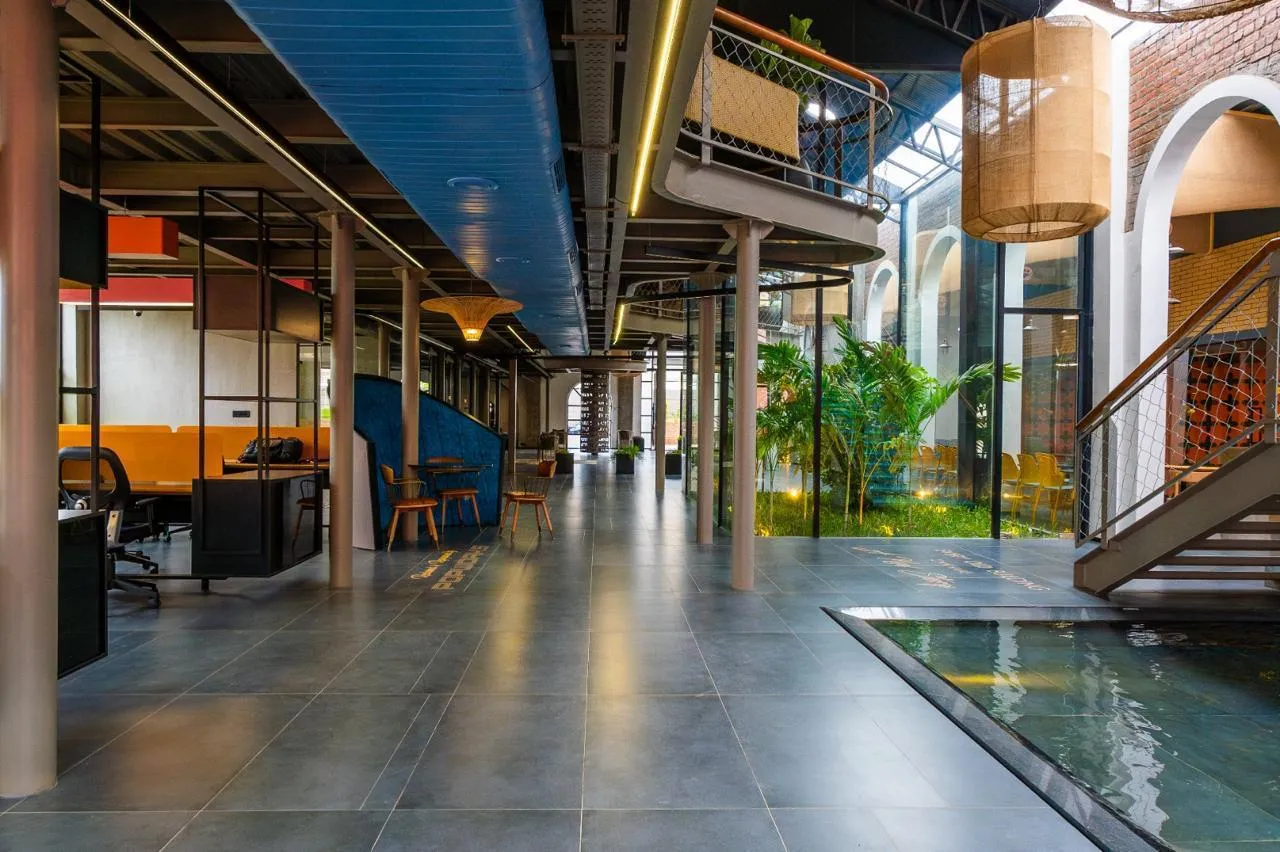
A defining characteristic of Jaisim’s architecture is its climatic intelligence. Working largely in the tropical conditions of South India, he developed an instinctive understanding of natural ventilation, shaded transitions, courtyards, and passive cooling. His buildings often rely on deep overhangs, verandahs, porous boundaries, and carefully oriented openings—strategies that reduce dependence on mechanical systems while enhancing spatial comfort.
Material honesty plays an equally important role in his work. Jaisim favours materials such as exposed brick, stone, concrete, timber, and terracotta, used with clarity and restraint. Rather than masking materials behind finishes, he allows them to express their texture and age naturally. This approach lends his buildings a sense of permanence, where weathering becomes part of architectural character rather than a flaw to be concealed.
His residential architecture, in particular, reveals a profound sensitivity to everyday life. Jaisim’s houses are not designed as statements, but as settings for living. Spatial sequences unfold gradually, encouraging movement, pause, and interaction with nature. Gardens, courtyards, and semi-open spaces blur the boundaries between inside and outside, creating homes that feel grounded rather than enclosed. Luxury, in this context, is defined not by opulence, but by comfort, light, and spatial generosity.
Beyond built work, Jaisim has been an influential voice in architectural discourse. He has served as Chairman of the Indian Institute of Architects, Karnataka Chapter, and has authored more than 150 papers and articles while delivering hundreds of lectures and presentations across India. Known for his candid opinions and philosophical reflections, he has consistently encouraged architects to question conventions and develop their own design ethics rather than follow prevailing fashions.
Mentorship has been another significant aspect of his contribution. Many architects who trained under him recall a practice culture rooted in inquiry, experimentation, and responsibility. Jaisim has long advocated for architecture as a lifelong pursuit rather than a commercial exercise, emphasising patience, observation, and intellectual engagement with the world.
Recognition for his work includes the J.K. Award – Architect of the Year, the Lifetime Achievement Award for Outstanding Performance in Architecture, and several national and international honours. Yet, his legacy is not defined by accolades. It lies instead in the quiet confidence of buildings that continue to perform, adapt, and remain relevant long after their completion.
In a time when architecture is increasingly driven by speed, spectacle, and social visibility, Jaisim’s work offers a compelling counter-narrative. His buildings remind us that architecture’s deepest impact is often subtle—felt in comfort, clarity, and continuity rather than instant visual drama. Through his unwavering commitment to context, climate, and human experience, Ar. Krishnarao Jaisim has shaped an architectural legacy that endures not by standing apart from its surroundings, but by belonging to them.