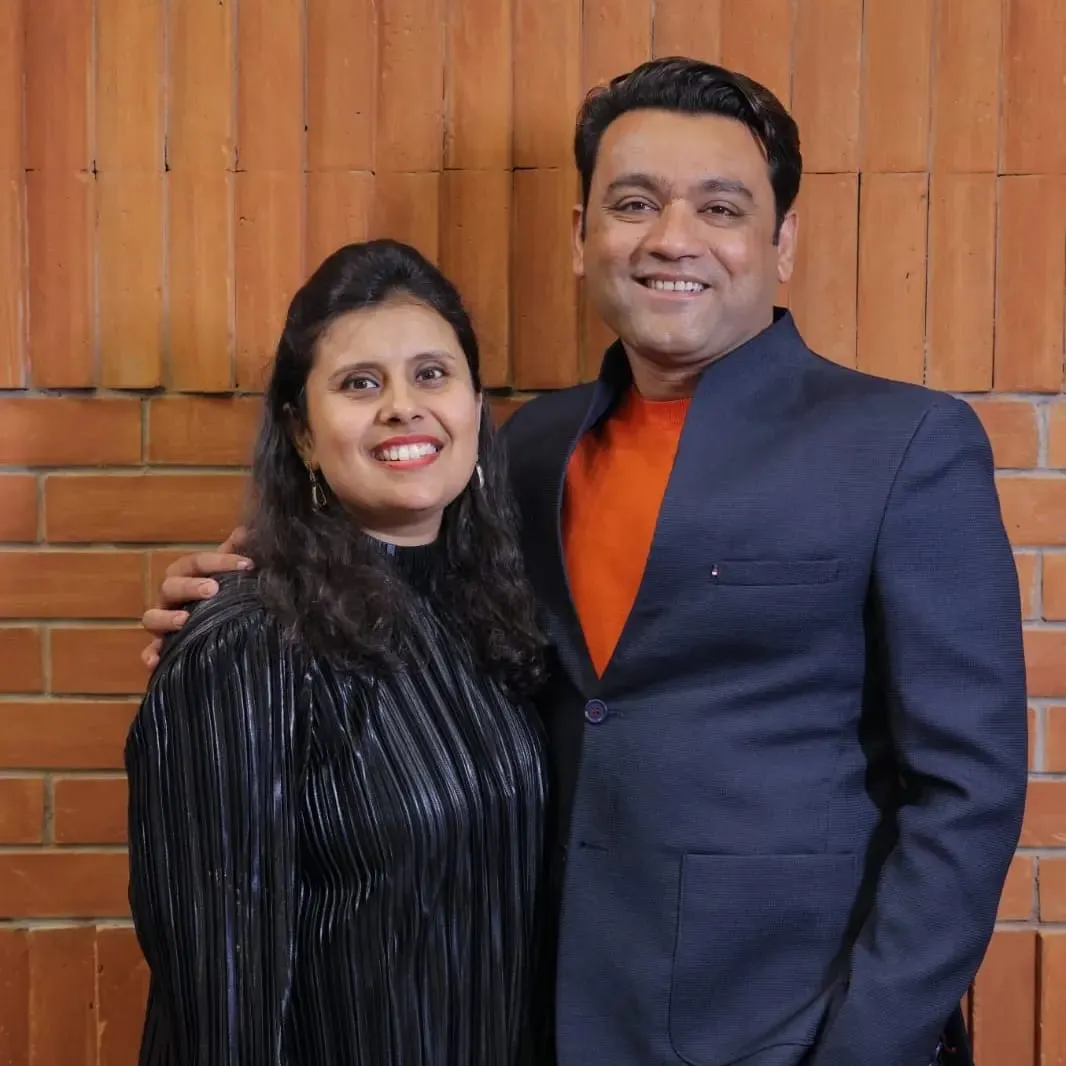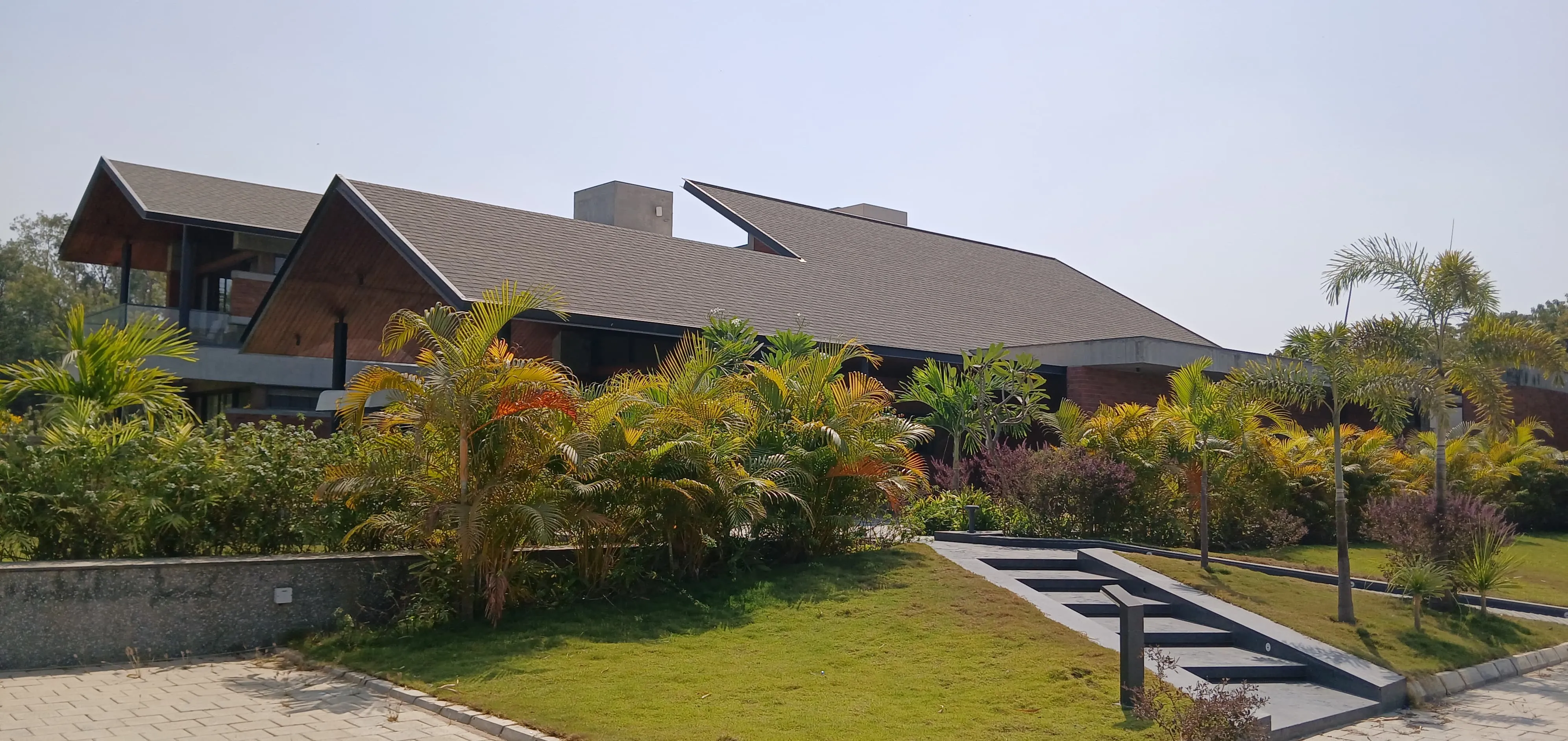
Set within the expansive eastern edges of Ahmedabad, close to the Sabarmati River, Spandan Bungalow—also known as the Mehta Residence—is a thoughtfully crafted weekend home that reinterprets traditional Indian spatial principles through a contemporary architectural lens. Designed by Ar. Avani Shah and Ar. Chintan Shah, founders of Avani Associates, the residence exemplifies a quiet yet confident architecture—one that prioritizes climate responsiveness, spatial hierarchy, and a seamless dialogue between indoors and outdoors.
Occupying a 1.2-lakh-square-foot plot, the house is deliberately positioned toward the rear of the site. This strategic placement creates an expansive landscaped foreground that functions as both a visual pause and a privacy buffer from the road. The approach to the house unfolds gradually, allowing the landscape to mediate the transition from the outside world to the intimate domestic realm within. The result is an arrival experience that feels layered, calm, and deeply connected to nature.


The architectural planning is shaped by the region’s climate and the lifestyle aspirations of a multigenerational family seeking a retreat from urban life. Oriented toward the northeast, the residence is carefully aligned to harness soft daylight while encouraging natural ventilation across primary living spaces. The living room, family lounge, verandahs, and infinity pool are positioned to receive diffused light and prevailing breezes, creating interiors that remain comfortable and luminous throughout the day.
The house follows a distinctive H-shaped configuration, a planning strategy that enables clear zoning without isolation. The front wing houses shared social spaces, fostering interaction and openness, while the rear wing accommodates more private functions such as bedrooms and a media room. These two wings are anchored by a central courtyard—an essential spatial and climatic element that draws light, air, and visual continuity deep into the plan. Extended verandahs further blur the boundary between built form and landscape, encouraging outdoor living as an integral part of daily life.
Architecturally, Spandan Bungalow carries a grounded yet dynamic presence. Sloping roofs descend toward the entrance, subtly lowering the scale of the building and creating a welcoming, human-scaled gesture. The articulation of rooflines introduces rhythm and movement, while gentle changes in level across the plan add spatial richness without overwhelming the simplicity of the form.
Materiality plays a crucial role in shaping the home’s identity. The use of natural stone, exposed finishes, timber shading devices, and deep verandahs reflects a climate-responsive approach rooted in regional sensibilities. These materials not only age gracefully but also enhance thermal performance, reinforcing the project’s commitment to sustainability through passive design strategies rather than overt technological interventions.
Outdoor living is woven seamlessly into the architecture. Semi-open dining verandahs extend family gatherings into the landscape, while an outdoor kitchen and barbecue area support informal, seasonal living. A thoughtfully placed vegetable garden further strengthens the family’s connection to nature, encouraging slow living and engagement with everyday rituals tied to the land.
Inclusivity is another defining aspect of the design. Ramped entries and open circulation paths ensure ease of movement across age groups, allowing the home to be comfortably inhabited by multiple generations. This sensitivity to accessibility is integrated subtly into the architectural language, reinforcing the idea that good design is as much about empathy as it is about form.
At its core, Spandan Bungalow is a harmonious synthesis of tradition and modernity—where courtyards, verandahs, and climate-responsive planning coexist with contemporary aesthetics and spatial fluidity. Designed over a 10-month period and spanning a built-up area of 6,647 sq. ft., the residence stands as a deeply personal yet universally resonant home—one that celebrates light, landscape, and the enduring wisdom of context-driven architecture.