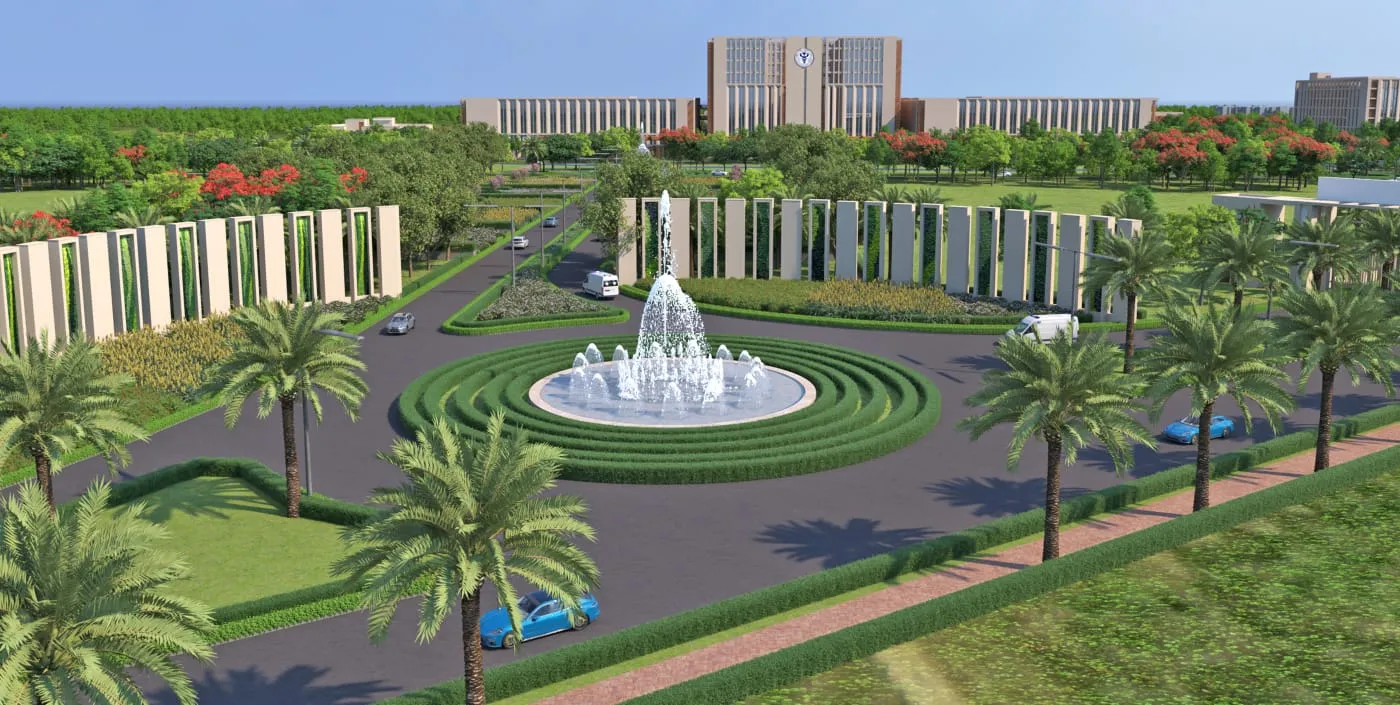
Emerging as a landmark in contemporary institutional architecture, AIIMS Rewari is envisioned as more than just a medical facility—it is a thoughtfully planned ecosystem where healthcare, education, and residential life coexist in harmony. Spread across over 210 acres, the campus reflects a sensitive response to terrain, climate, and institutional aspirations. The master plan establishes a seamless integration of diverse functions, guided by a design philosophy rooted in clarity of movement, environmental responsiveness, and the creation of dignified spaces for both healing and learning.

The arrival experience sets the tone for the campus. Carefully choreographed transitions—from structured access roads and underpasses to a calm, welcoming entrance plaza—create a sense of progression and pause. Landscaped avenues, shaded walkways, and a series of interconnected courts introduce a human scale to the expansive site. These elements not only enhance visual coherence but also create a unified spatial experience that softens the institutional character.

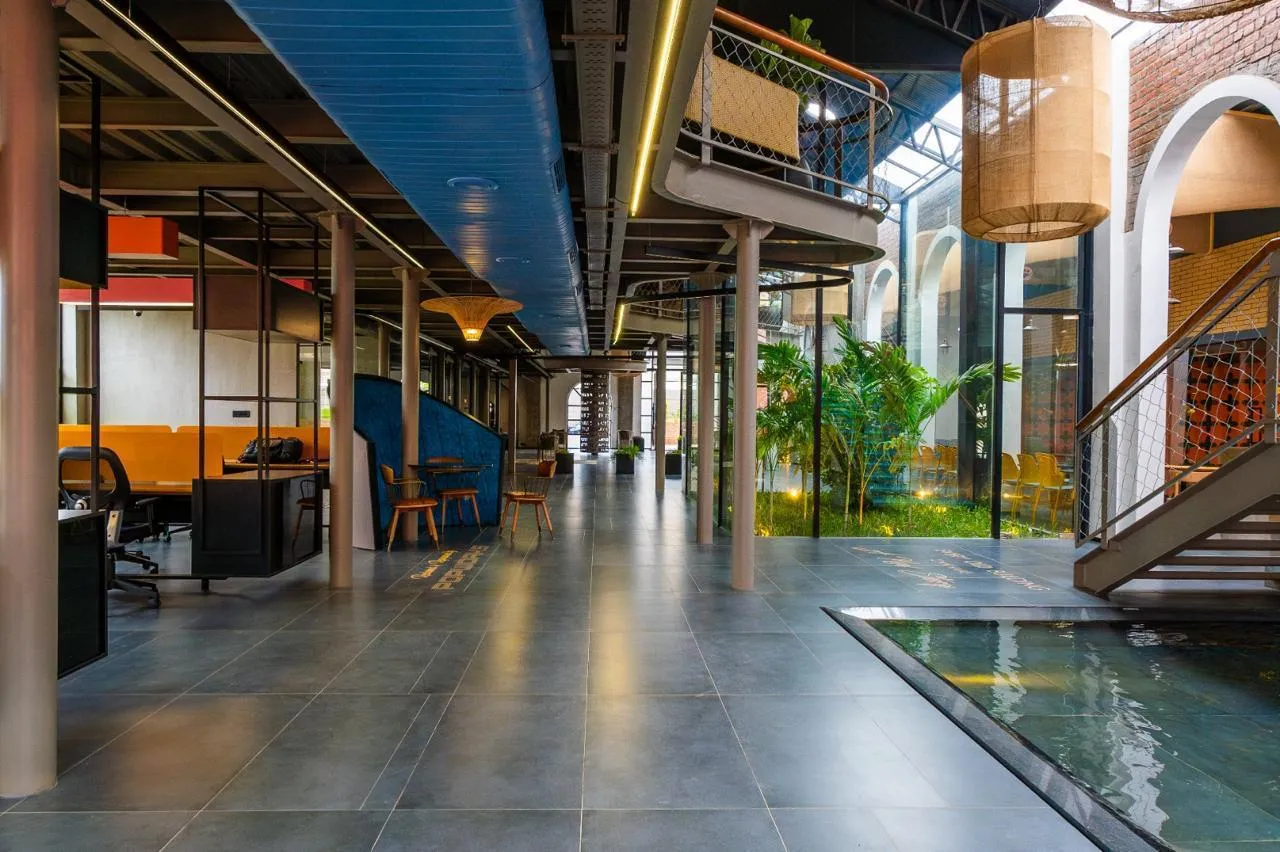
Architecturally, the campus adopts a contemporary yet functional language. Clean geometries, rhythmic façade patterns, and a balanced interplay of solid and void define its identity. A strong emphasis is placed on natural light, with large glazed openings, deep overhangs, and internal courtyards working together to illuminate interiors while responding to the region’s harsh climate. This integration of passive design strategies ensures both comfort and sustainability.
At the heart of the campus lies the hospital block—an embodiment of precision and efficiency. Designed as a multi-level structure, it integrates emergency services, diagnostics, inpatient care, critical units, operating theaters, and administrative spaces within a clear vertical hierarchy. Circulation is meticulously organized, with separate pathways for public, patient, staff, and service movements, ensuring operational efficiency while maintaining hygiene and safety standards. Despite its scale, the building incorporates courtyards and open volumes that alleviate density and introduce moments of visual relief.
Inside the hospital, the design moves beyond clinical functionality to embrace a more humane architectural approach. Spaces are infused with natural light, visual openness, and thoughtful proportions that reduce the institutional feel. Courtyards punctuate the built form, offering moments of calm and connection to nature. Circulation is intuitive, guiding users seamlessly from one department to another, while patient areas prioritize privacy, comfort, and emotional well-being.
The Academic Block introduces a different rhythm, focused on collaboration and intellectual exchange. Organized around expansive courtyards and double-height spaces, it fosters interaction across disciplines. Laboratories, lecture halls, and reading areas are connected through light-filled corridors, encouraging both formal and informal learning. This design creates a vibrant academic environment where knowledge flows as freely as the spaces themselves.
Complementing this is the AYUSH Block, which embodies a softer architectural expression aligned with traditional healing philosophies. Designed to evoke tranquility, it features therapy rooms and consultation spaces bathed in natural light and connected through quiet transitional zones. The architecture bridges modern medical infrastructure with the ethos of holistic wellness, creating a space that is both functional and restorative.
The residential and hostel precincts complete the campus vision by forming a self-sustained living environment. Rather than serving as mere accommodation, these areas are designed as vibrant communities with green open spaces, shaded pathways, and shared amenities. The arrangement of hostels, faculty housing, and guest facilities reflects a campus-town approach, promoting interaction, comfort, and a strong sense of belonging.
The Team : Ar. Shyam Singh &Ar. Kanwal Preet Kaur


Ultimately, AIIMS Rewari stands as a model for future institutional design in India. It transcends the idea of isolated buildings, presenting instead a cohesive landscape where architecture supports life in all its dimensions. By balancing efficiency with empathy, and scale with human experience, the campus redefines what it means to design for healthcare, education, and community—shaping a space that is as visionary as it is grounded in purpose.